
Retelling is more than remembering every page. When children move toys through a beginning, a problem, and an ending, they practice choosing important details and connecting events in their own language.
Quick answer
Choose three or four story landmarks, match simple objects to the characters, retell collaboratively, and leave room for the child to change the story after the original version is clear.
Why this skill can be difficult
A direct request to summarize can feel like a test. Toys shift the task into play and give children something visible to move when words are still developing. The adult can support sequence without demanding an exact performance.
Ages 4–8 cover a wide range of language, memory, self-control, and social experience. A child may understand the idea in a calm conversation and still need an adult beside them when the real moment arrives. Teach the sequence before the difficult situation, reduce the number of words during stress, and return to reflection only when the child can participate.
A practical six-step routine
- Read for enjoyment first. Complete the story without stopping on every page for a question or turning the first reading into a lesson.
- Choose story landmarks. Identify the opening situation, an important change or problem, one key attempt, and the ending.
- Find simple stand-ins. Use blocks, spoons, animals, paper figures, or household objects; exact character toys are unnecessary.
- Start with a shared sentence. The adult begins the opening, then pauses for the child to move a figure or add the next event.
- Support sequence gently. Use the book’s illustrations or three quick drawings when the child wants help remembering what came next.
- Invite a new version. After retelling the original, ask what could change if the character made a different choice or visited a new place.
Words an adult can use
Short, respectful sentences are easier to remember than a lecture. Use language that describes the situation, protects safety, and gives the child a next action.
- “Let us choose the three parts we would need if we told this story to someone who had never heard it.”
- “This block can be the house. Which toy will be the main character?”
- “Show me what happened after the problem began.”
- “We told the book’s version. Now you may invent a different ending.”
A playful activity to try
Place three sheets of paper on the floor labeled with pictures for beginning, middle, and end. The child moves the toy to each sheet and acts out one important event. For a second round, mix the sheets and work together to restore the story order.
Keep the first practice short enough to end successfully. Switch roles when possible so the child experiences both sides of the interaction. Later, refer back to the game with one familiar cue instead of teaching the whole lesson again.
How to use the idea at home
Keep the activity optional and short. Some children will retell immediately, while others will borrow a character in free play later. Both responses can show engagement with the story.
How to use the idea in a classroom
Small groups can assign roles such as narrator, character mover, setting builder, and illustration checker. Rotate roles so confident speakers do not control the entire retelling.
Adjust the support by age
Ages 4–5
Use two or three events and accept gestures, sound effects, and partial sentences. The adult can supply connecting words such as first, then, and finally.
Ages 6–8
Ask which events are essential and which details can be left out. Older children can compare two characters’ views or create a missing scene.
A common mistake to avoid
Avoid correcting every word that differs from the book. Retelling should preserve the main meaning, but children need space to paraphrase and use their own vocabulary.
Look for clearer sequence, more causal language, independent reference to illustrations, and ability to identify the central problem. A shorter accurate retelling is more useful than memorized detail.
Quick checklist
- Read for enjoyment first is clear enough to use without a long explanation.
- Choose story landmarks is clear enough to use without a long explanation.
- Find simple stand-ins is clear enough to use without a long explanation.
- Start with a shared sentence is clear enough to use without a long explanation.
- Support sequence gently is clear enough to use without a long explanation.
- The child has a safe way to pause, ask for help, or try again.
- The adult reviews progress without shame or comparison.
Frequently asked questions
Do we need special story props?
No. Ordinary objects encourage symbolic play and keep setup simple.
What if the child cannot remember the story?
Use the pictures, reread a section, or let the adult model one event before inviting participation.
Should the child retell every book?
No. Keep most reading focused on pleasure and use retelling selectively with books the child enjoys.
Can the child change the ending immediately?
First clarify one or two landmarks from the original, then welcome a new version so comprehension and creativity both have space.
Does retelling help early readers?
It supports oral language, sequence, and understanding, which are useful foundations, without replacing direct reading instruction.
Final takeaway
Choose three or four story landmarks, match simple objects to the characters, retell collaboratively, and leave room for the child to change the story after the original version is clear. Begin with one small practice and repeat it in a familiar setting. The purpose is not perfect behavior or instant independence; it is a child who has clearer language, safer options, and a reliable adult relationship while the skill develops.
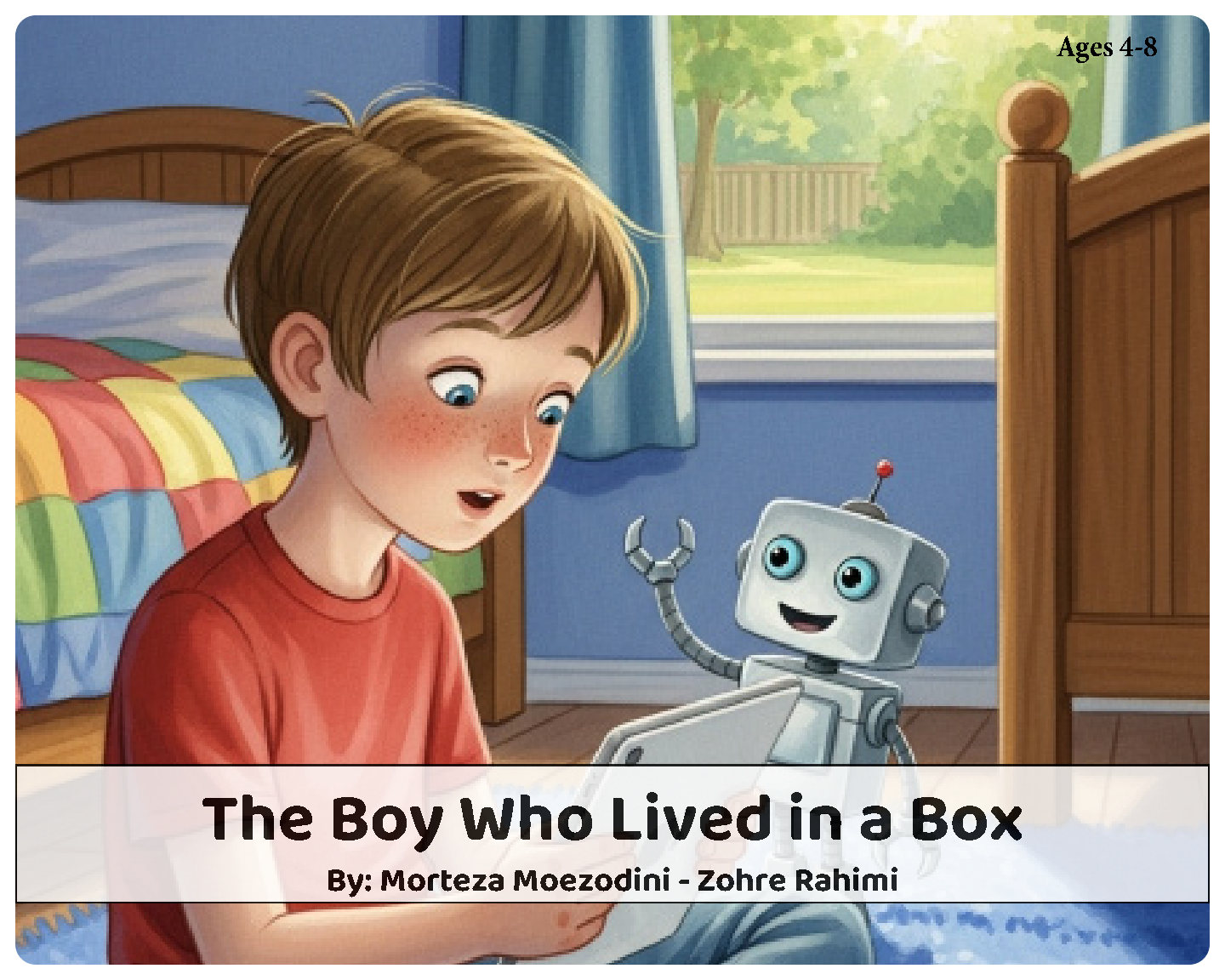
Explore The Boy Who Lived in a Box
This guide is educational and is not a substitute for individualized medical, developmental, mental-health, legal, or educational advice. Seek qualified guidance when a child’s distress or difficulty is persistent, severe, affects safety, or interferes with daily life.